

The Away Day Aesthetic: Why Football Subcultures are the New Luxury Travel
Forget the Michelin-starred restaurants and five-star hotel suites. The new luxury isn't found in chandeliers and champagne flutes: it's discovered on overnight coaches to Bologna, in standing-room-only train compartments to Manchester, in the narrow cobblestone alleys outside San Siro where the smell of diesel mingles with espresso steam. The modern connoisseur doesn't collect passport stamps from beach resorts; they collect match-worn scarves, mental maps of hidden trattorias near Stadio Olimpico, and the muscle memory of which Metro line gets you closest to Stamford Bridge without alerting the wrong crowd.
The away day has evolved from football necessity to cultural pilgrimage: a form of travel that values authenticity over comfort, knowledge over guidebooks, and belonging over luxury. And if you know where to look, you'll notice its disciples aren't wearing technical hiking gear or Instagram-ready resort wear. They're wearing graphic tees that tell stories, trainers that cost more than the flight, and carrying themselves with the quiet confidence of those who've earned their place in the subculture.
The Subversion: When British Rail Met Working-Class Aspiration
The away day began as corporate pragmatism. In the 1970s, British Rail introduced off-peak "awayday" tickets: cheap fares designed to fill empty trains during non-commuter hours, marketed to families seeking budget seaside trips and pensioners visiting distant relatives. But football supporters saw something else entirely: affordable passage to tribal warfare conducted on grass rectangles across England.
What happened next was pure subcultural alchemy. Working-class lads from Liverpool, Manchester, and London's East End began traveling to away matches dressed not in club colors and scarves, but in expensive Italian sportswear: Sergio Tacchini, Fila, Ellesse, and the holy trinity of adidas Samba, Stone Island, and C.P. Company. This was the birth of the casuals, and it represented something revolutionary: the democratization of luxury through knowledge rather than wealth.

The contradiction was the point. You'd ride the cheapest possible transport while wearing trainers that cost a week's wages. You'd skip meals to afford a Lacoste polo in a shade of green that only true heads would recognize. The aesthetic spoke a complex language: it said "I know something you don't," "I belong to something you can't buy your way into," and most importantly, "I'm working-class, but I refuse to look it."
This wasn't consumption for consumption's sake. It was armor, identity, and passport all rolled into one carefully curated outfit.
The Italian Connection: From Paninaro to Patrimonio
While British casuals were developing their look in the terraces of Old Trafford and Anfield, something parallel was unfolding in Milan. The Paninari: named after Panini sandwich bars where they congregated: were creating their own youth subculture built around American and British designer sportswear. They wore Timberland boots, Moncler jackets, and yes, those same adidas trainers that British lads were discovering on European away days.
The cross-pollination was inevitable. British supporters traveling to European matches: particularly in Italy: would return with labels unknown on their home soil. They'd find C.P. Company jackets with hidden hoods and goggle lenses, Stone Island pieces with detachable badges that could be hidden during confrontations, Diadora trainers in colorways that hadn't crossed the channel yet. These items became currency, proof of authenticity, membership cards to an exclusive club that had nothing to do with money and everything to do with being there first.
Italian football culture added its own layers. Where British away days were often about organized chaos and territorial assertion, the Italian approach layered in aesthetics of la bella figura: the beautiful figure, the art of making a good impression. Going to a match wasn't just about supporting your team; it was about being seen, about style as spiritual expression. The Ultras understood that how you showed up mattered as much as showing up at all.
This wasn't fashion. This was patrimony: cultural inheritance passed down through knowing glances and initiated conversations.
The Graphic Tee Revolution: Storytelling You Can Wear
Fast forward to 2026, and the away day aesthetic has transcended its origins to become a legitimate form of luxury travel for those in the know. But the uniform has evolved. While Stone Island still commands respect and the right pair of trainers can open doors, it's the graphic tee that's become the calling card of the modern football traveler: the badge that says "I understand the references, I've done the research, I belong."

A great football graphic tee operates on multiple levels simultaneously. To the uninitiated, it's simply attractive design. But to those who know: to the person you lock eyes with in a Roman trattoria, to the local standing next to you at a derby match, to the bartender in a Manchester city center pub: it's a handshake, a password, a demonstration of earned knowledge.
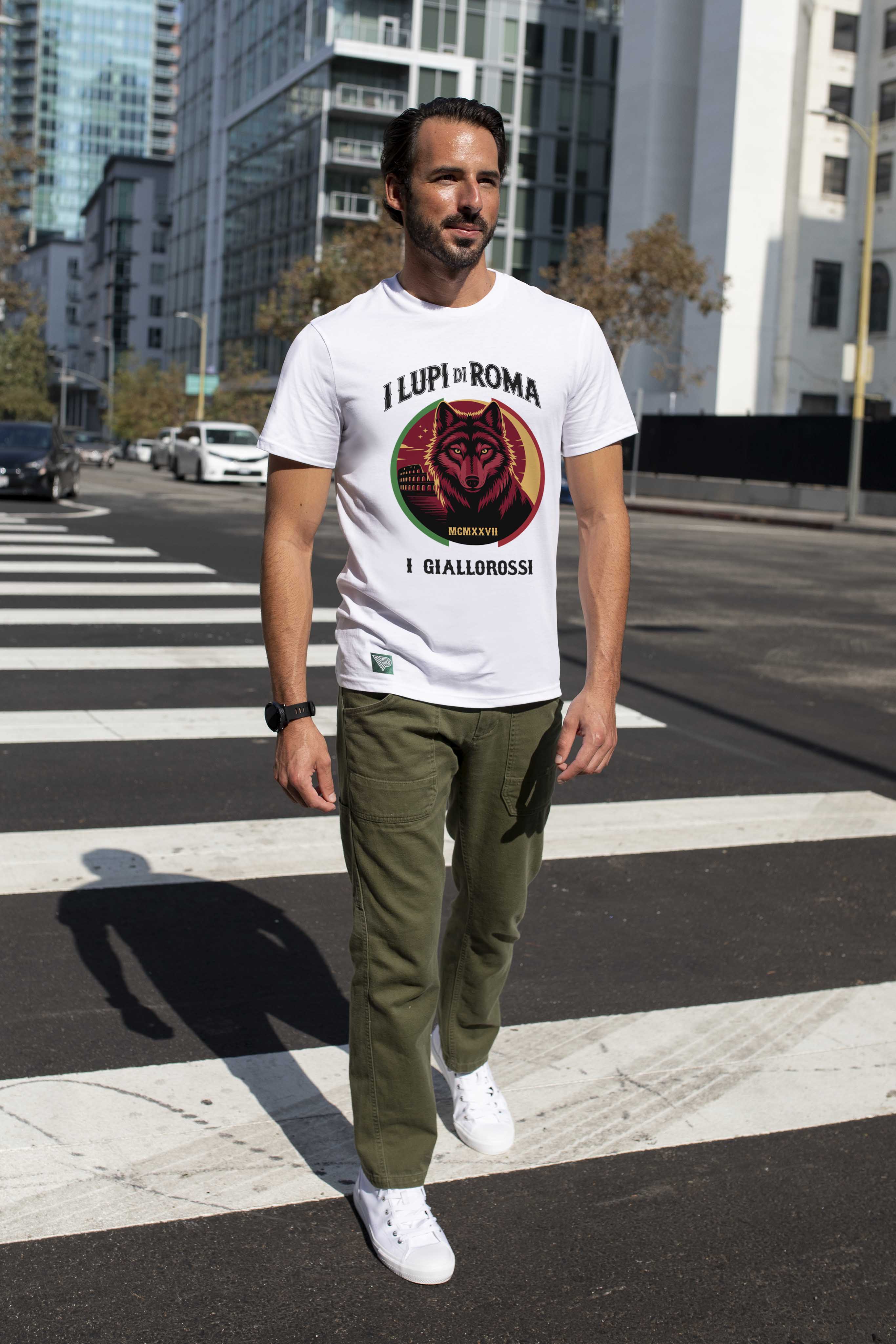
Consider a shirt celebrating I Lupi di Roma: the wolves of Rome. The casual observer sees attractive typography and vintage design. But the initiated recognize the wolf symbol's significance to AS Roma, understand why the Colosseum features prominently, know that wearing such a shirt in certain neighborhoods of Rome immediately identifies you as one of the giallorossi faithful. It's cultural literacy made tangible, history worn on the body.

The same principle applies to designs celebrating the Derby d'Italia: Inter versus Juventus, Italy's greatest rivalry. These aren't just shirts; they're declarations of allegiance, conversation starters, and tests of knowledge all at once. Wearing one requires understanding the weight it carries, the history it references, the cultural battleground it represents.
The New Luxury: Earned Rather Than Bought
What makes the modern away day aesthetic "luxury" has nothing to do with thread count or price points. It's luxury redefined: the luxury of authentic experience, of cultural fluency, of belonging to something that can't be faked or fast-tracked. You can buy a €500 Stone Island jacket, but you can't buy the knowledge of which bars around Stadio San Paolo (RIP, renamed Diego Armando Maradona) serve the best sfogliatelle at 6 AM after an overnight coach from Turin.
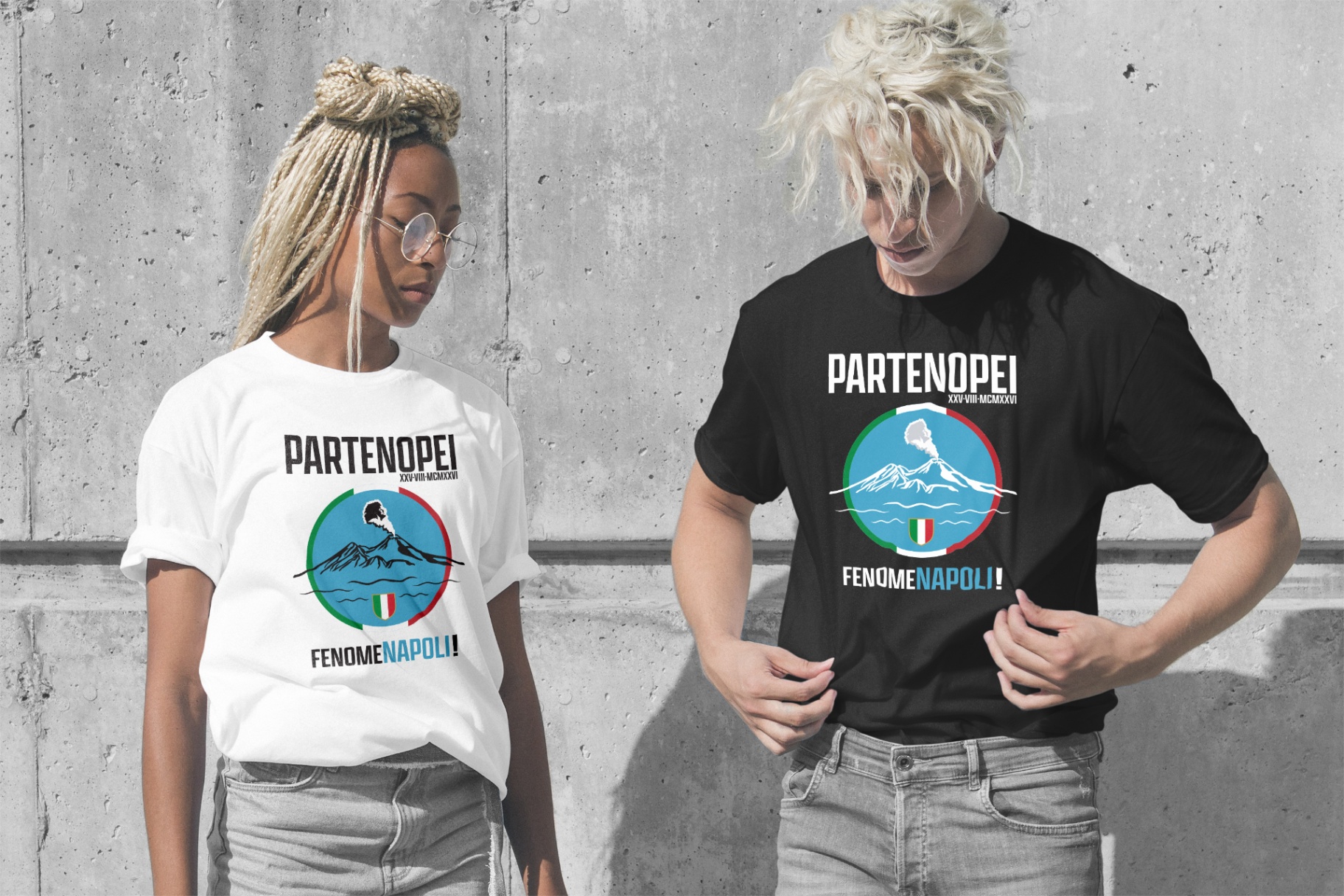
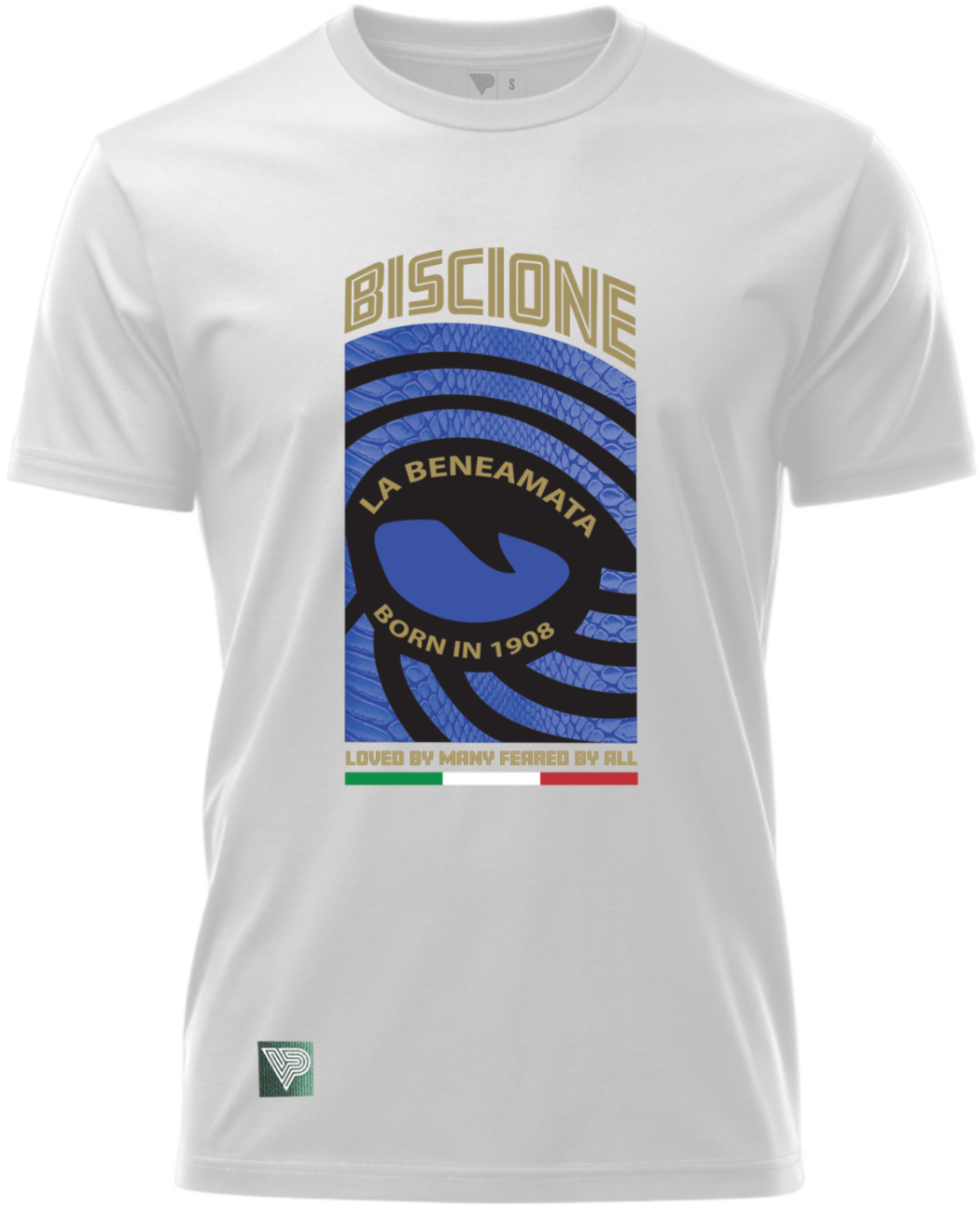
The graphic tee has become the perfect vessel for this new luxury because it democratizes the aesthetic while maintaining the barriers to entry. A vintage-inspired design celebrating Napoli's Partenopei or Inter's Biscione serpent doesn't require spending hundreds on a designer jacket. But it does require understanding: knowing why the serpent matters to Inter, recognizing what Partenopei means to Neapolitan identity, appreciating the visual language of Italian football culture.
This is luxury as cultural capital rather than economic capital. It's the ability to walk through Trastevere wearing a Roma-inspired tee and have locals nod in recognition. It's knowing which terrace section to stand in at different stadiums, which Metro exits to avoid, which songs to sing and which to respectfully observe. It's understanding that an away day isn't just about seeing a match: it's about embedding yourself, however briefly, in a living culture.
Dressing for the Modern Away Day
The contemporary away day traveler understands that the uniform is both armor and invitation. The graphic tee serves as the centerpiece: bold enough to signal belonging, designed with enough authenticity to withstand scrutiny from local supporters. Pair it with clean trainers (new enough to show you care, worn enough to prove you've walked these streets before), tapered trousers or well-fitted jeans, and perhaps a subtle jacket that can go from stadium to aperitivo bar without missing a beat.
But here's what separates the tourists from the travelers: the graphic tee must tell a story you understand. Wearing a Carbonara & Calcio design that blends Roman cuisine with Biancocelesti identity isn't just about aesthetic appeal: it's about recognizing that food and football are inseparable in Italian culture, that what you eat and who you support are both declarations of identity, that the pasta on your plate and the scarf around your neck come from the same place of cultural pride.
The modern away day isn't about conquest or chaos anymore: though both still simmer beneath the surface in the right circumstances. It's about cultural immersion conducted at street level, about earning your place through knowledge and respect, about understanding that the best travel experiences can't be five-starred or TripAdvisor-reviewed.
The Passport You Can Wear
In 2026, as travel becomes increasingly homogenized and "authentic experiences" are packaged and sold to the highest bidder, the away day aesthetic represents something genuinely countercultural: travel as subcultural practice, exploration as earned privilege, belonging as demonstrated knowledge rather than purchased access.
The graphic tee: when done right, when rooted in genuine cultural understanding rather than superficial appropriation: becomes your passport to this world. It's the difference between watching a match as a spectator and experiencing it as a participant, between visiting Rome and understanding what it means to be Roman on matchday, between seeing football and feeling it.
This is luxury travel for those who understand that luxury isn't about what you spend: it's about what you know, where you've been, and whether you've earned the right to wear the shirt. The modern away day traveler doesn't collect hotel points; they collect stories, connections, and the quiet satisfaction of belonging to something bigger than themselves.
And it all starts with a graphic tee that says: I know. I understand. I'm one of you.
The question is; are you? ⚽️🇮🇹