

1998 Called, It Wants Its Stripes Back: How Inter Milan's R9-Era Revival Is Sparking a Retro Wave Across Serie A
There is a specific frequency to the sound of a San Siro roar from thirty years ago: a heavy, tectonic rumble that preceded the arrival of something supernatural on the pitch. To speak of the 1998-99 Serie A season is to speak of a golden age that refuses to stay in the past; it is a ghost that haunts the modern game, reminding us of a time when the Sette Sorelle: the Seven Sisters: ruled the world with iron fists and silken touches. As we navigate the 2026/27 season, that ghost has returned, not as a whisper, but as a full-throated revival of the aesthetics that defined the peak of Italian football heritage.
From the return of Inter’s horizontal hoops to the celestial celebrations in Naples, the current landscape of Italian football is looking backward to move forward. This is not mere nostalgia; it is a reclamation of identity in an era of digital transience. We are witnessing a cultural movement where the Serie A inspired t-shirt is no longer just apparel: it is a piece of historical fabric that carries the weight of legends like Baggio, Zidane, and the incomparable Ronaldo.
The Nerazzurri Resurrection: Il Fenomeno and the Power of the Hoop
To wear the stripes of Inter in 1998 is to drape oneself in the kinetic energy of a man who moved faster than the camera could capture: Il Fenomeno. While the traditional 1998-99 home kit utilized the classic vertical lines, it was the grey and blue horizontal hoops of the 1997-98 UEFA Cup campaign that cemented Inter’s visual dominance in the late nineties. Today, that aesthetic has returned with a vengeance.
The revival of the horizontal stripe is a tribute to the sheer, unadulterated power of Ronaldo Nazario’s debut seasons in Milan. It represents a break from tradition that felt as edgy then as it does now: a design that stood apart from the rigid verticality of the past. When you pull on an Inter-inspired retro Italian football tee, you aren't just wearing a club’s colors; you are wearing the audacity of a team that believed they could conquer the world through flair alone. The 2026/27 kits have leaned heavily into this "alt-tradition," proving that the "Inter vibe" is less about a static logo and more about the feeling of a lightning bolt hitting the San Siro turf.
Napoli 100: A Century of Fire Beneath Vesuvius
If Inter is the cold, calculated flair of the North, Napoli is the beating, sun-drenched heart of the South. As the club celebrates its centenary in 2026, the city of Naples has transformed into a living museum. A hundred years of history: from the founding in 1926 to the dizzying heights of the Maradona era: have been distilled into a singular, celebratory aesthetic.
The Napoli centenary crest is a masterclass in nostalgic curation. It rejects the hyper-minimalism of modern branding in favor of a soul-stirring tribute to the Partenopei spirit. This season's designs are defined by that iconic Azzurro: a blue so deep it feels like the Mediterranean itself: accented with gold detailing that signals a century of survival and triumph. To wear a Napoli-inspired piece today is to swear an oath of loyalty to a city that lives and dies by the bounce of a ball. It is a badge of cultural identity that connects the modern supporter to the generations who stood on the terraces long before the world knew the name Diego.

The Viola Renaissance: Artistry in the Curva Fiesole
While Milan and Naples celebrate power and passion, Florence remains the bastion of the intellectual and the beautiful. The 1998-99 Fiorentina side, led by the thunderous Gabriel "Batigol" Batistuta and the mercurial Rui Costa, was perhaps the most aesthetically pleasing team in the history of the league. They were "Winter Champions" that year: a fleeting moment of perfection that has become the blueprint for the club's 2026 kit direction.
The "Renaissance-inspired" designs we see today are a dialogue between the Uffizi Gallery and the Curva Fiesole. Think deep Viola fabrics woven with subtle fleur-de-lis patterns that echo the marble of the Duomo. This is where Italian football streetwear transcends the stadium and enters the realm of high fashion. To wear a Fiorentina-inspired garment is to acknowledge that football is, at its core, a performing art. It is a celebration of the "number 10" philosophy: the belief that one beautiful pass is worth more than a dozen gritty tackles.

Calcio & Cucina: The Flavor of the Nineties
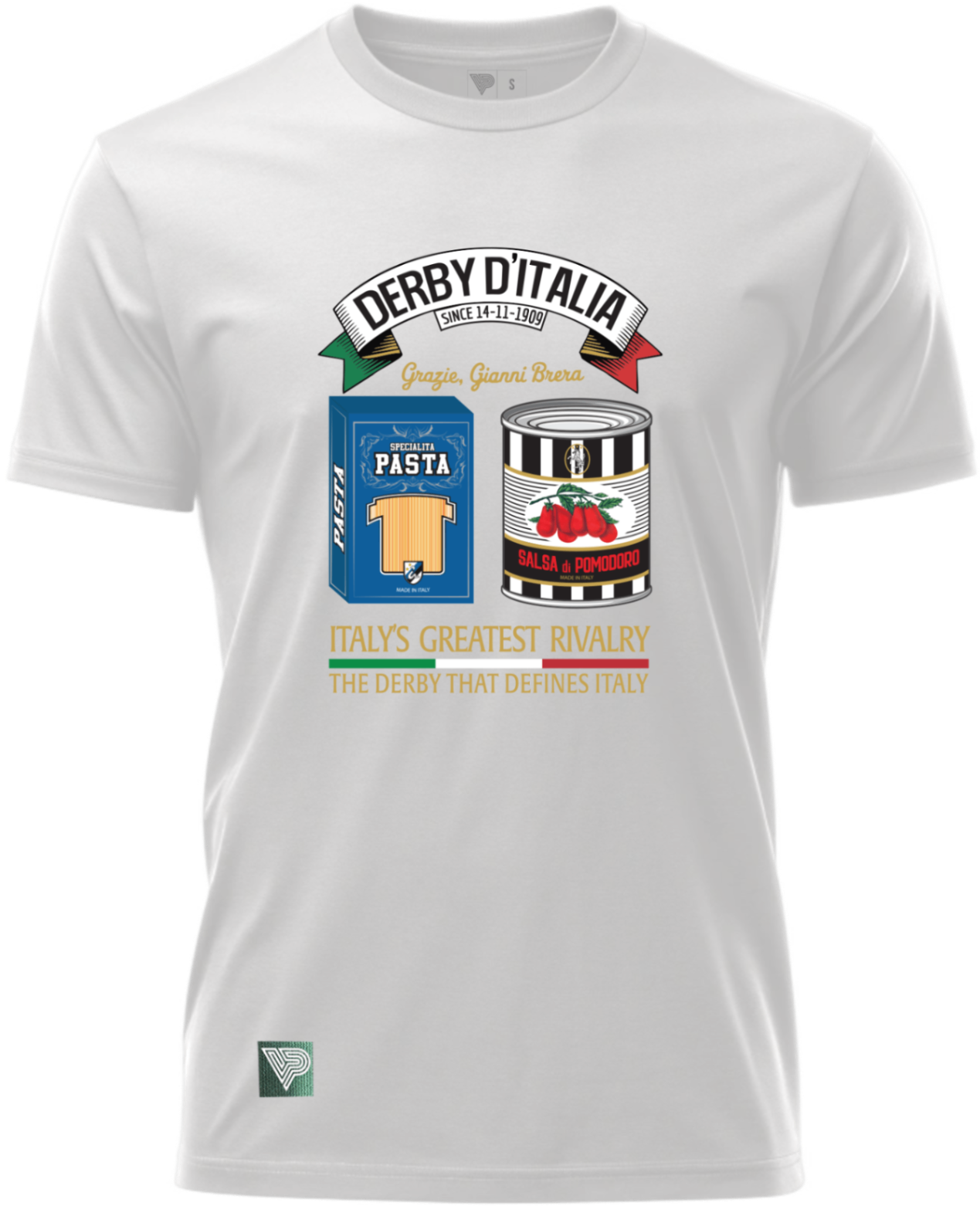
We cannot discuss the heritage of Calcio without discussing the table. In Italy, the Sunday match is a ritual preceded by a Sunday feast: a symphony of ragù and red wine that sets the stage for the drama at the stadium. Our Calcio & Cucina line was born from this intersection, where the smell of fresh pasta meets the scent of freshly cut grass.
The 1998 era was the last great age before the hyper-commercialization of the sport, a time when you could still find world-class players sharing a meal in a local trattoria after a match. The "Calcio & Cucina" aesthetic captures this grounded, human element of the game. It’s about the textures: the rough linen of a tablecloth, the distressed cotton of a retro Italian football tee, and the rich, saturated colors of a vintage broadcast. When we blend the icons of the pitch with the icons of the kitchen, we aren't just making a statement; we are celebrating a lifestyle that refuses to be rushed.

The Sette Sorelle and the Streetwear Shift
The "Retro Wave" isn't limited to the top of the table. From the red and black stripes of an AC Milan vintage inspired t-shirt to the understated elegance of a Bologna or Parma throwback, the entire league is leaning into its archives. The 1998-99 season was the peak of the Sette Sorelle: Juventus, Milan, Inter, Roma, Lazio, Fiorentina, and Parma: a time when any one of seven teams could realistically claim the Scudetto.
This parity created a diversity of design that modern leagues can only envy. Each club had a distinct visual language, often defined by iconic sponsors like Pirelli, Sony, or Nintendo. By reviving these silhouettes, modern streetwear is recapturing a sense of variety and local pride. To walk down a street in 2026 is to see a kaleidoscope of 90s-inspired palettes: neon accents that scream Miami Vice, muted earthy tones that whisper of Tuscan hills, and the bold, primary colors of the classic kits.

Wear the Legacy
We don't just sell apparel; we curate the artifacts of a culture that shaped our world. The revival of the 1998 aesthetic is a testament to the enduring power of the beautiful game: a reminder that while players may retire and stadiums may be rebuilt, the soul of the club lives on in the fabric we choose to wear.
Whether it is the haunting horizontal stripes of Il Fenomeno, the fiery blue of the Partenopei centenary, or the artistic purple of the Florentine Renaissance, these designs are more than fashion. They are an invitation to join a lineage of passion, a way to signal to the world that you understand the weight of the history you carry on your back. The ghost of '98 hasn't just returned; it has taken up permanent residence in our wardrobes.
Wear the legacy. Honor the history. Live the game.