

90s Serie A Was Peak Human Civilization: A nostalgic deep dive into the era of 'Seven Sisters' and why its fashion will never be topped
Let's be honest about something the modern football world refuses to admit : we peaked in the 90s, and we've been in decline ever since. Not just football. Culture. Style. The entire aesthetic of what it meant to be alive and passionate about Calcio. If you weren't watching Serie A between 1990 and 2000, you missed the absolute zenith of human achievement in sport, fashion, and pure, unadulterated swagger.
This isn't nostalgia talking. This is fact. The 90s Serie A era : specifically the legendary "Seven Sisters" period : represented a convergence of tactical brilliance, international star power, and cultural dominance that will never, ever be replicated. Not by the Premier League with its plastic billions. Not by La Liga with its Galáctico fantasies. And certainly not by whatever soulless, analytics-driven corporate football product they're trying to sell us in 2026.
The Seven Sisters: When Italy Owned the World
The term "Seven Sisters" (Sette Sorelle) refers to the seven Italian clubs that dominated not just Serie A, but European football itself throughout the 1990s: AC Milan, Inter Milan, Juventus, AS Roma, Lazio, Parma, and Fiorentina. These weren't just football clubs : they were cultural empires, each with distinct identities, philosophies, and styles that transcended the pitch and infiltrated the streets.
Italian clubs won 13 of the 30 European titles available during the decade. Thirteen. The league became the most-watched and financially dominant competition on the planet, attracting talent from every corner of the globe who understood that if you wanted to test yourself against the absolute best, you came to Italy. Serie A was the final boss of world football.

AC Milan went 58 league games unbeaten from May 1991 to March 1993 under Fabio Capello : an era known as Milan degli Invicibili. That's not just dominance. That's artistic expression through tactical perfection. That's Arrigo Sacchi's pressing game meeting Italian defensive mastery. That's Baresi, Maldini, Costacurta forming a back line that made strikers question their career choices.
And the fashion? Forget everything you think you know about modern football aesthetics. The 90s Serie A look was effortlessly cool in a way that today's manufactured streetwear collaborations will never touch. Baggy Kappa tracksuits. Diadora training gear. Those iconic Lotto kits with bold geometric patterns that looked like they were designed by artists, not corporate marketing committees. The stands were filled with fans draped in scarves, smoking cigarettes, and living every moment like it was the last dance.
The Legends Who Defined an Era
Roberto Baggio. Paolo Maldini. Gabriel Batistuta. Francesco Totti. Alessandro Del Piero. Ronaldo. Zinedine Zidane. Christian Vieri. These names don't just represent great players : they represent a philosophy of football that prioritized individual brilliance within tactical structures, where a single moment of genius could decide a championship.

Il Re di Roma wasn't just a footballer : Totti was a walking embodiment of Roman identity, a player who chose loyalty and legacy over mercenary riches. When he stepped onto the Olimpico pitch, he carried the weight of centuries of Roman history, tradition, and pride. That's the difference between 90s Calcio culture and modern football : players weren't just representing clubs, they were representing entire civilizations.
Del Piero at Juventus? That wasn't just a striker wearing number 10 : that was Pinturicchio, "The Little Painter," creating masterpieces with every curved shot that bent physics and broke hearts. His style off the pitch mirrored his elegance on it: understated, classic, timeless. No flashy Instagram stunts. No manufactured brand partnerships. Just pure, concentrated class in a tailored suit and perfectly gelled hair.
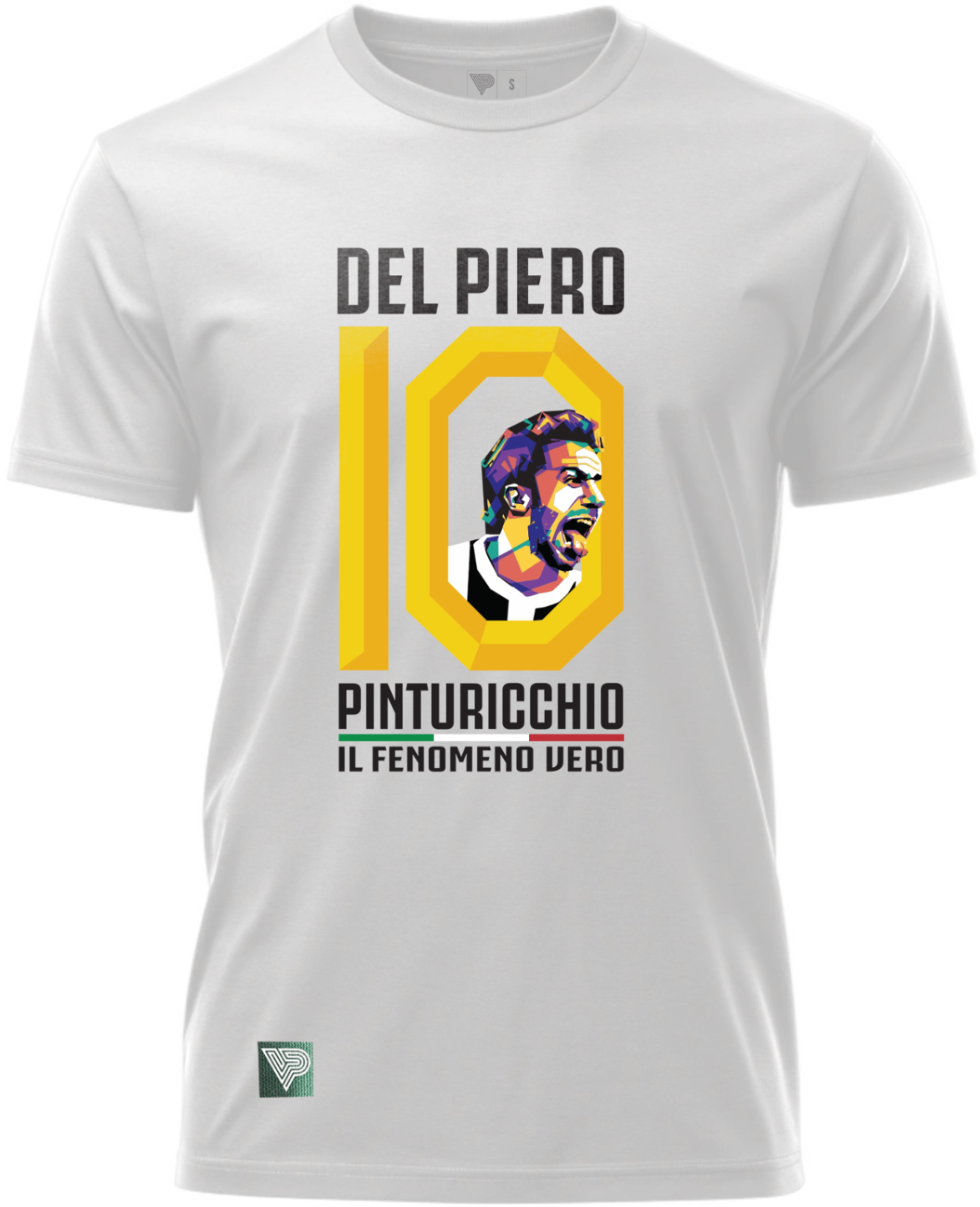
Giuseppe Signori topped the Serie A scoring charts for the entire decade with 141 goals : but more than the numbers, it was how he played. Technical, intelligent, ruthless in front of goal. The 90s Serie A striker wasn't just about pace and power : it was about positioning, timing, and ice-cold finishing under pressure from defenders who'd genuinely hurt you if you embarrassed them.
Why the Fashion Will Never Be Topped
Here's where we need to talk about the elephant in the room: modern football kits are garbage. There, we said it. They're engineered plastic wrapped around athletes who look like sponsored billboards for cryptocurrency exchanges and betting apps. The soul has been extracted, commodified, and sold to the highest bidder.
The 90s Serie A aesthetic was different because it emerged organically from the culture of Italian football itself. The kits were works of art : AC Milan's red and black stripes weren't just colors, they represented the Rossoneri identity forged over a century. Roma's deep crimson jerseys weren't marketing decisions, they were visual manifestations of Roman imperial glory translated to modern sport.
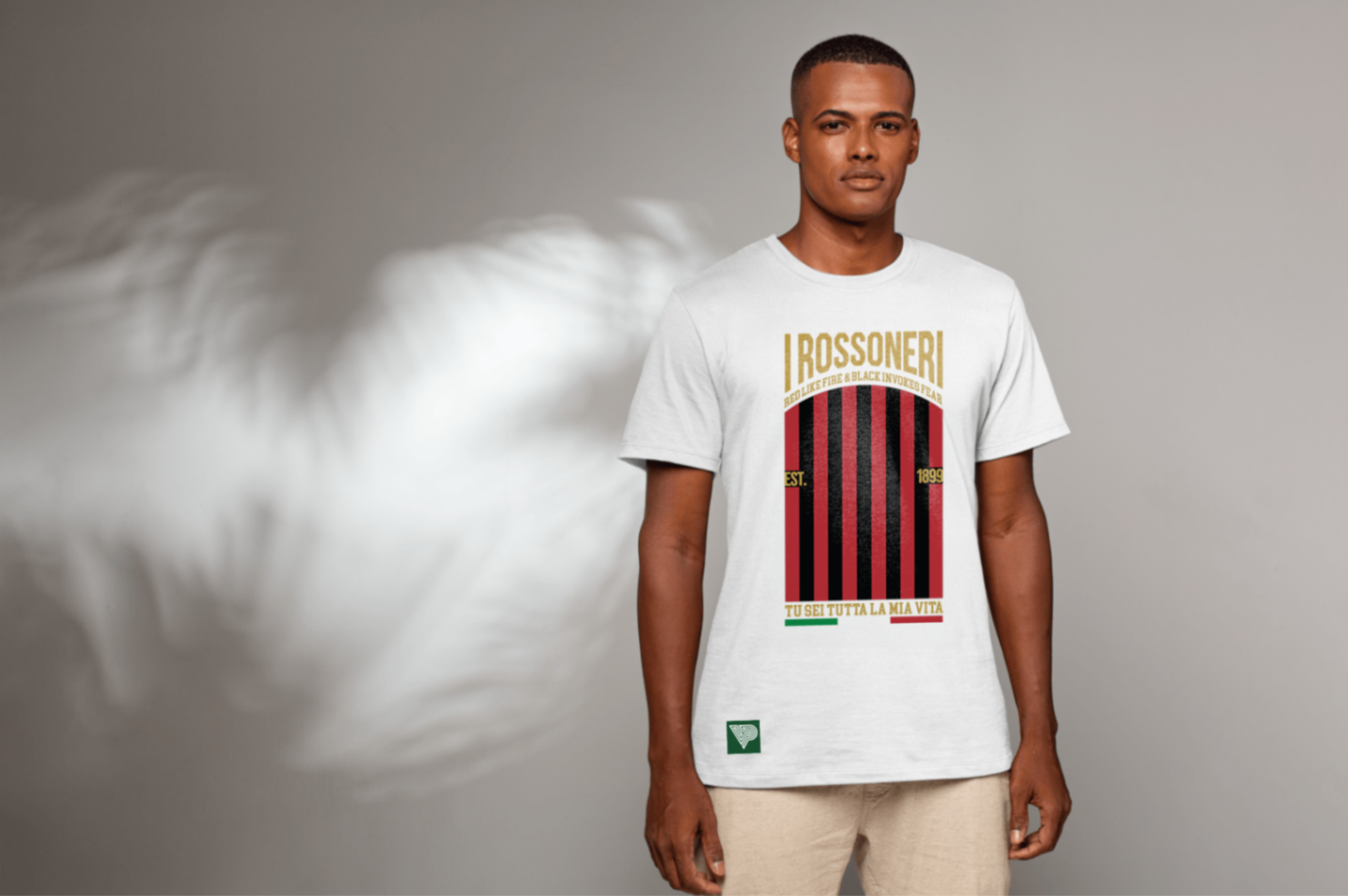
And the streetwear? Forget your modern "football fashion" collaborations. In the 90s, fans wore their club colors with pride, not irony. Vintage Lazio tracksuits. Fiorentina bomber jackets. Inter scarves wrapped around necks in the Curva Nord. This wasn't fashion for fashion's sake : it was tribal identity, cultural belonging, a visual declaration of who you were and what you stood for.
The beauty is that this aesthetic translates perfectly to modern streetwear precisely because it wasn't designed for modern streetwear. When you wear a Serie A inspired t-shirt today, you're not following a trend : you're channeling a specific moment in cultural history when football, fashion, and identity merged into something greater than the sum of its parts.

The Tactical Poetry of Italian Football
What made 90s Serie A fashion so distinctive was that it reflected the football being played. Italian tactical philosophy : catenaccio evolved into total football : required intelligence, discipline, and creativity. The fashion followed the same principles. Nothing was random. Every element served a purpose while maintaining aesthetic beauty.
The structured defense paired with explosive attacking transitions? That's exactly how the fashion worked : classic foundations with moments of bold, unexpected flair. A simple white tee with a graphic that suddenly explodes in Roma yellow and red. Clean lines interrupted by retro typography that demands attention. This is the DNA of Italian football t-shirt culture.
Calcio & Cucina: When Football Tasted Better Too
Let's not pretend that 90s Serie A existed in a vacuum. Italian football culture is inseparable from Italian food culture : both are about tradition, quality, and refusing to compromise for the sake of convenience. The pre-match pranzo was as sacred as the match itself. Pasta prepared with the same care that Maldini prepared his defensive positioning.

This connection between Calcio and Cucina isn't nostalgia : it's philosophy. Both demand respect for craft, both reject shortcuts, and both understand that the process is as important as the result. When you wear a football heritage tee that blends these elements, you're not just celebrating a sport : you're celebrating an entire way of life that modern football has abandoned in its race to the bottom.
Why This Matters in 2026
We're living through an era of football homogenization. Every league looks the same. Every kit follows the same template. Every player wears the same boring athleisure off the pitch. The distinctiveness that made 90s Serie A special has been systematically eliminated in favor of global market appeal and merchandising opportunities.
But here's the beautiful irony : precisely because modern football has become so generic, the appetite for authentic football heritage has exploded. People are hungry for something real, something with soul, something that connects them to a time when football clubs represented actual cultural identities rather than corporate brands.
That's why vintage-inspired designs that channel 90s Calcio aesthetics aren't just trendy : they're necessary. They're a rebellion against the sanitized, algorithm-optimized present. They're a middle finger to the consultants who think football should be designed by focus groups.

The Verdict
Was 90s Serie A actually peak human civilization? Obviously not : we still had dial-up internet and terrible pizza outside of Italy. But was it peak football civilization? Absolutely, unquestionably, without a shadow of doubt.
The Seven Sisters era represented football at its most pure, most competitive, most stylish, and most culturally significant. It was a decade when Italian clubs dominated Europe, when tactical innovation reached new heights, when individual brilliance flourished within structured systems, and when football fashion meant something beyond quarterly earnings reports.
The fashion from that era will never be topped because it emerged from genuine cultural forces rather than marketing departments. It was created by people who loved football first and saw commercial opportunities second. It prioritized identity over trends, heritage over hype, and substance over viral moments.
When you wear something that channels that 90s Serie A energy, you're not being retro for retro's sake. You're aligning yourself with a specific philosophy about what football should be : passionate, intelligent, stylish, and deeply connected to cultural identity. You're choosing substance in an era of superficiality. You're choosing Calcio over content.
And honestly? That's the most stylish choice you can make in 2026. 🇮🇹⚽