

From the Olimpico to the Streets: Why Roma's Football Culture Hits Different
There's a reason you can feel Roma before you see it.
Walk through Trastevere on a Sunday afternoon. Listen to the old men arguing about the squad at the bar. Watch the kids kicking a ball against ancient walls that have seen empires rise and fall. Notice the yellow and red: giallorosso: everywhere. On flags. On scarves. On the hearts of everyone who calls this city home.
This isn't manufactured fandom. This isn't a marketing department's fever dream about "building community." This is nearly a century of sweat, tears, and pure Roman stubbornness woven into the fabric of a city that refuses to be anything but itself.
And honestly? In an era of sportswashing, billion-dollar transfers, and clubs that feel more like hedge funds than football institutions: Roma's raw, unfiltered culture hits different. Let's talk about why.
The Olimpico Isn't Just a Stadium: It's a Declaration

Some stadiums are cathedrals. The Olimpico is a colosseum: fitting, given what city we're talking about.
When you step into the Curva Sud, you're not just entering a section of seats. You're entering a living, breathing organism that's been chanting the same songs, waving the same banners, and carrying the same fire since 1927. The ultras here don't need a DJ to tell them when to get loud. They don't need a "make some noise" graphic on the big screen. The noise is the experience.
There's a reason opposing players have called the Olimpico one of the most intimidating atmospheres in world football. It's not the architecture: it's the people. It's the smoke. It's the way 60,000 voices sync up like they've rehearsed this their entire lives. Because in a way, they have.
Roma wasn't founded as some businessman's vanity project. The club was deliberately created in 1927 to represent the Eternal City itself. The Capitoline Wolf. The colors of Rome. This was football as civic identity from day one: a club born to carry the weight and the glory of one of history's greatest cities.
That kind of origin story? You can't buy it. You can't manufacture it. And you definitely can't replicate it in some soulless new-money operation.
The Streets Carry the Same Energy
Here's the thing about Roma's football culture: it doesn't stop at the stadium gates.
The city breathes giallorosso. You'll see it spray-painted on walls in Testaccio. You'll hear it in the way taxi drivers dissect last week's match like it's geopolitical strategy. You'll feel it in the trattorias where Totti's face hangs next to photos of nonna and the Pope.
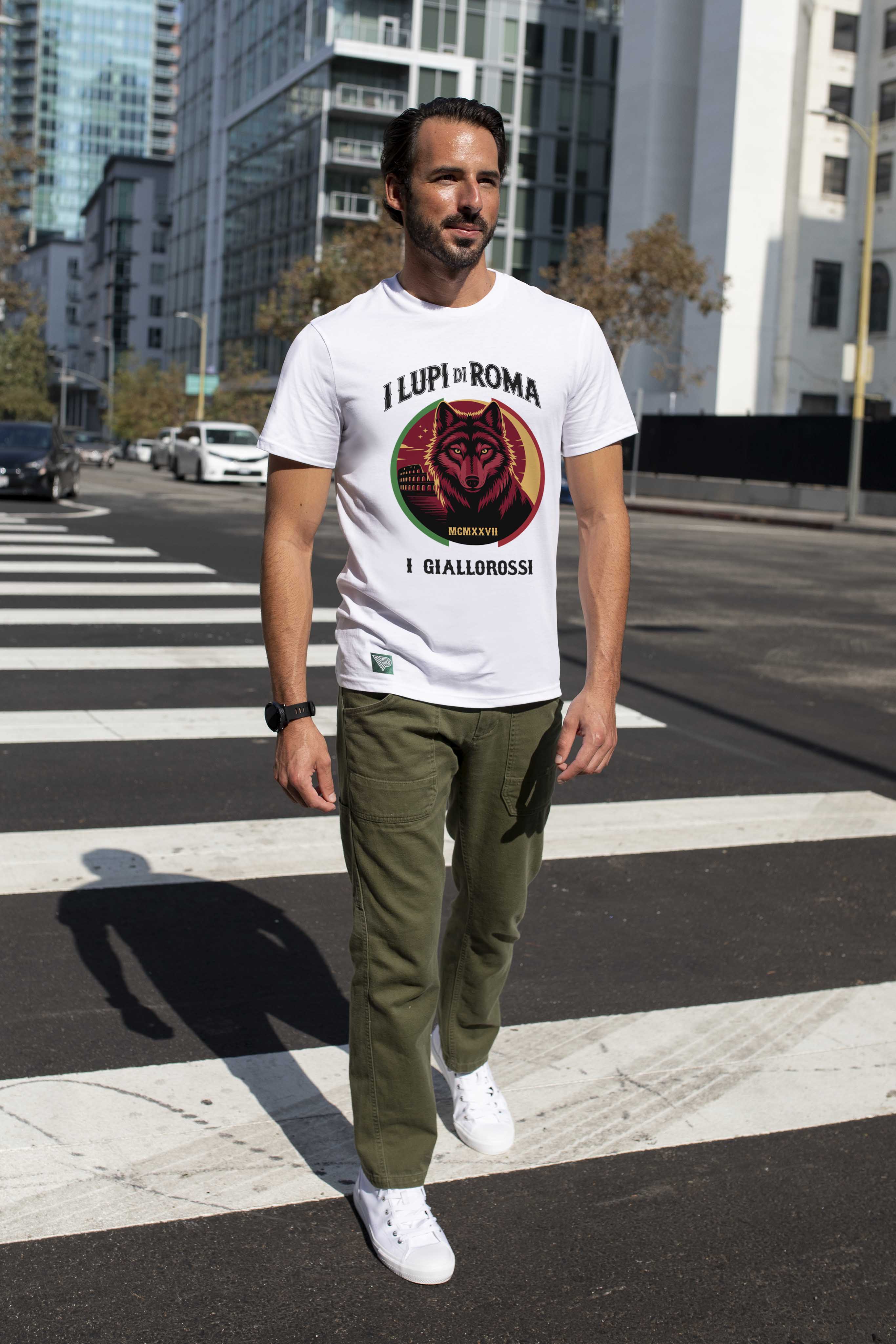
This is what we mean when we talk about city vibes. Roma isn't a club you support from a distance. It's a club you wear, you argue about, you pass down to your children like a family heirloom. The connection between the Olimpico and the cobblestone streets is seamless: because for Romans, there's no separation between football and life.
Compare that to the sanitized, corporate experience at some of Europe's "bigger" clubs. You know the ones. Where tickets cost a month's rent. Where longtime supporters get priced out so tourists can take selfies. Where the atmosphere feels more like a theater than a battlefield.
Roma's streets reject that energy entirely. This is football for the people who actually live it: not for the people who consume it as content.
Il Capitano: When a Player Becomes a City
You cannot: cannot: talk about Roma's culture without talking about Francesco Totti.

Born in Rome. Raised in Rome. Played his entire 25-year career for Roma. Retired as a Roma legend. This wasn't some mercenary who happened to stick around. This was a man who turned down Real Madrid, turned down the Premier League money, turned down everything: because why would you leave home?
Totti wasn't just a player. He was Il Re di Roma: The King of Rome. When he led the club to its third Serie A title in 2001, it wasn't just a championship. It was a coronation. A city celebrating itself through the man who represented everything it loved about its football.
In an era where loyalty is treated like a weakness, Totti's career stands as a middle finger to modern football's obsession with "bigger moves" and "legacy building" at multiple clubs. His legacy was built in one place. With one badge. For one city.
That's the Roma way. And it hits different.
The Derby della Capitale: This Is Personal
Every city with two clubs has a derby. But the Derby della Capitale between Roma and Lazio? This one cuts deeper.
When Lazio refused to merge with the other Roman clubs that formed AS Roma in 1927, they didn't just create a rival: they created a fundamental divide in the city's identity. This isn't Manchester United vs. Manchester City money battles. This isn't Barcelona vs. Real Madrid political theater.
This is personal. Neighborhood versus neighborhood. Family versus family. A rivalry so intense that friendships have ended over it, that marriages have been tested by it, that the city literally splits in two when the fixture approaches.
The atmosphere at a Derby della Capitale is unlike anything else in football. It's beautiful. It's terrifying. It's everything the sport should be when it's allowed to be raw and real instead of packaged for international broadcast.
Wearing the Culture: Roma on Your Chest

So what does all this mean for those of us who feel this culture in our bones: even if we've never set foot in the Curva Sud?
It means wearing the wolf. It means carrying I Lupi di Roma on your chest like a badge of belonging. It means choosing a Roma football culture tee over some generic fast-fashion kit that'll fall apart after three washes.
At Vintage Pitch, we've always believed that football apparel should tell a story. And Roma's story is one of the best ever told. From the Capitoline Wolf to the yellow and red stripes, from the Roman numerals marking 1927 to the passion that flows from the Olimpico to every corner of the city: this is heritage you can wear.
A retro Italian football tee isn't just clothing. It's a statement. It says you understand what makes this sport beautiful. It says you reject the corporate sanitization of football culture. It says you stand with the fans who've been there through the Scudetti and the heartbreaks, through the glory years and the rebuilding seasons.
The Bottom Line: Authenticity Can't Be Bought
Roma's football culture hits different because it was never designed to appeal to everyone.
It wasn't focus-grouped. It wasn't optimized for global markets. It wasn't built to sell merchandise to people who couldn't point to Rome on a map. It was built by Romans, for Romans, in a city that's been perfecting the art of passionate existence for thousands of years.
And in 2026: when so much of football feels hollow, manufactured, and desperately trying to be everything to everyone: that kind of authenticity is rarer than a Serie A title.
So yeah. From the Olimpico to the streets. From Totti's number 10 to the wolf on your chest. From the Curva Sud's roar to the quiet pride of wearing giallorosso in your own neighborhood.
Roma hits different. And if you know, you know.
Daje Roma. 🐺