

Pinturicchio vs. The World: How Del Piero's style defined a generation of Juventus fans and why it's still the ultimate street look
There's a reason why Alessandro Del Piero isn't just remembered: he's worshipped. While modern footballers chase brand deals and Instagram metrics, Pinturicchio carved out something far more lasting: an entire aesthetic philosophy that fused Italian elegance with street-level rebellion. In 2026, when everyone's drowning in soulless athleisure and corporate kit drops, Del Piero's legacy stands as the ultimate blueprint for why football heritage will always trump whatever trend is trending.
This isn't nostalgia for nostalgia's sake. This is about understanding why a number 10 jersey worn with the right attitude still makes you the most interesting person in any room.
The Birth of Pinturicchio: When Art Met Football
The nickname came first from Roberto Baggio's shadow: Del Piero's technical brilliance and creative playing style earned him the "Pinturicchio" moniker, a reference to the Renaissance painter known for intricate, delicate work. But where Baggio was the divine ponytail, Del Piero became something else entirely: Italy's first legitimate pop icon in cleats.
The 1997/1998 season was the inflection point. Long, greasy hair that would make a grunge band jealous. A playing style that made defenders look like they were stuck in quicksand. And most importantly, a fantasista mentality: that untranslatable Italian concept of the creative player who doesn't just score goals but paints them across the pitch with technical flair and impossible vision.
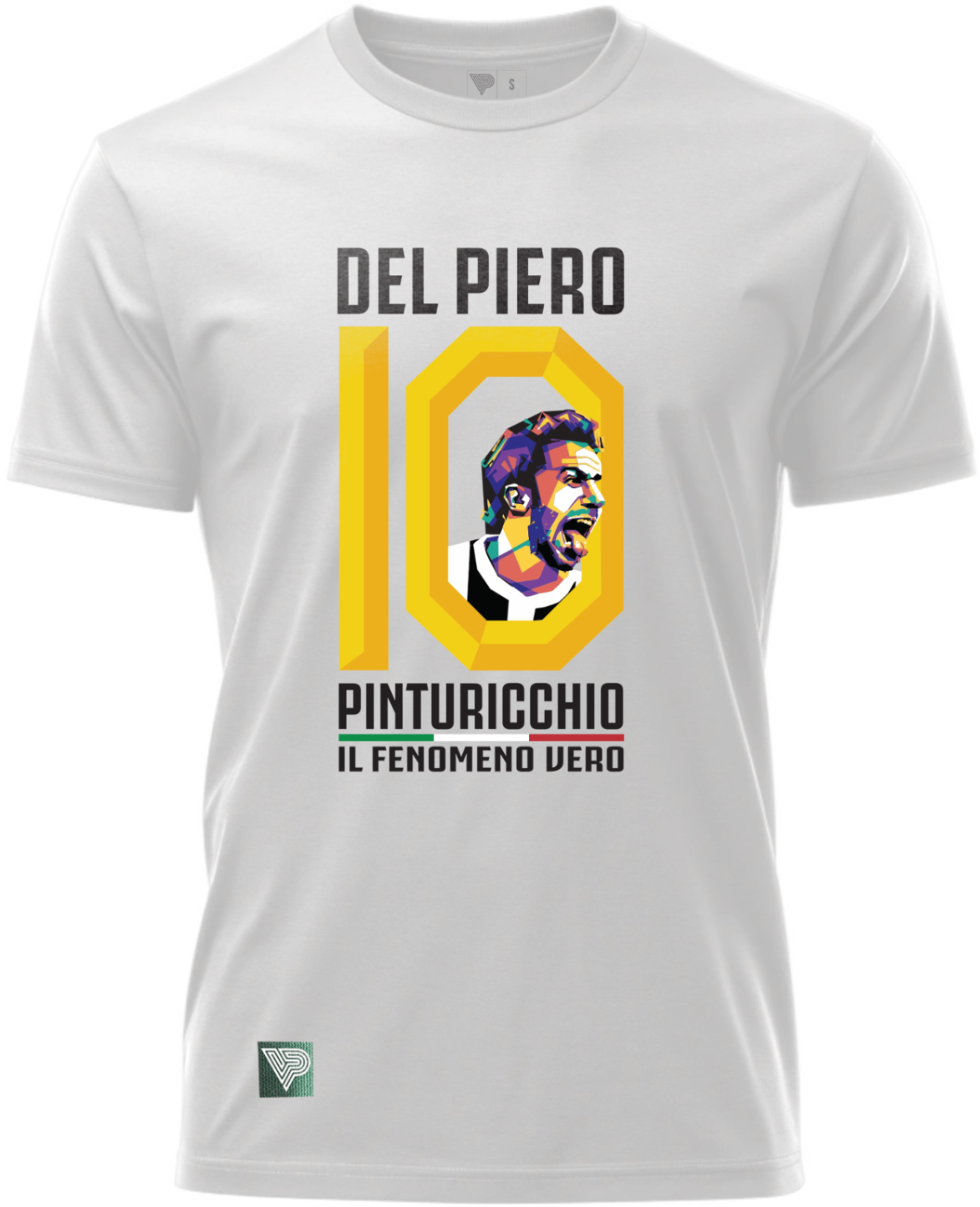
Del Piero wasn't trying to be cool. He just was. And that's the distinction that gets lost in today's overly curated football culture. The man tied laces around the top of his socks to prevent them from sagging over his shin guards: a detail so small, yet so deliberate. He wore Predator boots with the tongue reversed for better ball contact. He adopted colored wristbands inspired by Michael Jordan (black and yellow for La Vecchia Signora, blue and white for the Azzurri) and kept that tradition alive through Serie B purgatory, Australia, and India.
These weren't fashion statements manufactured by a marketing team. They were personal choices that became cultural signifiers.
La Vecchia Signora and the Religion of Style
Juventus: La Vecchia Signora, the Old Lady: has always represented more than football. It's Italian elegance, winning mentality, and a certain aristocratic arrogance all rolled into black and white stripes. Del Piero embodied that duality perfectly: refined enough to grace the pages of fashion magazines, gritty enough to drag Juve through Serie B after Calciopoli.
When Del Piero stood in the Stadio delle Alpi (may it rest in peace) with those wristbands catching the Turin lights, he wasn't just a footballer: he was a statement. He proved that you could be stylish without trying, legendary without the ego, and iconic without losing the essence of what made you real in the first place.
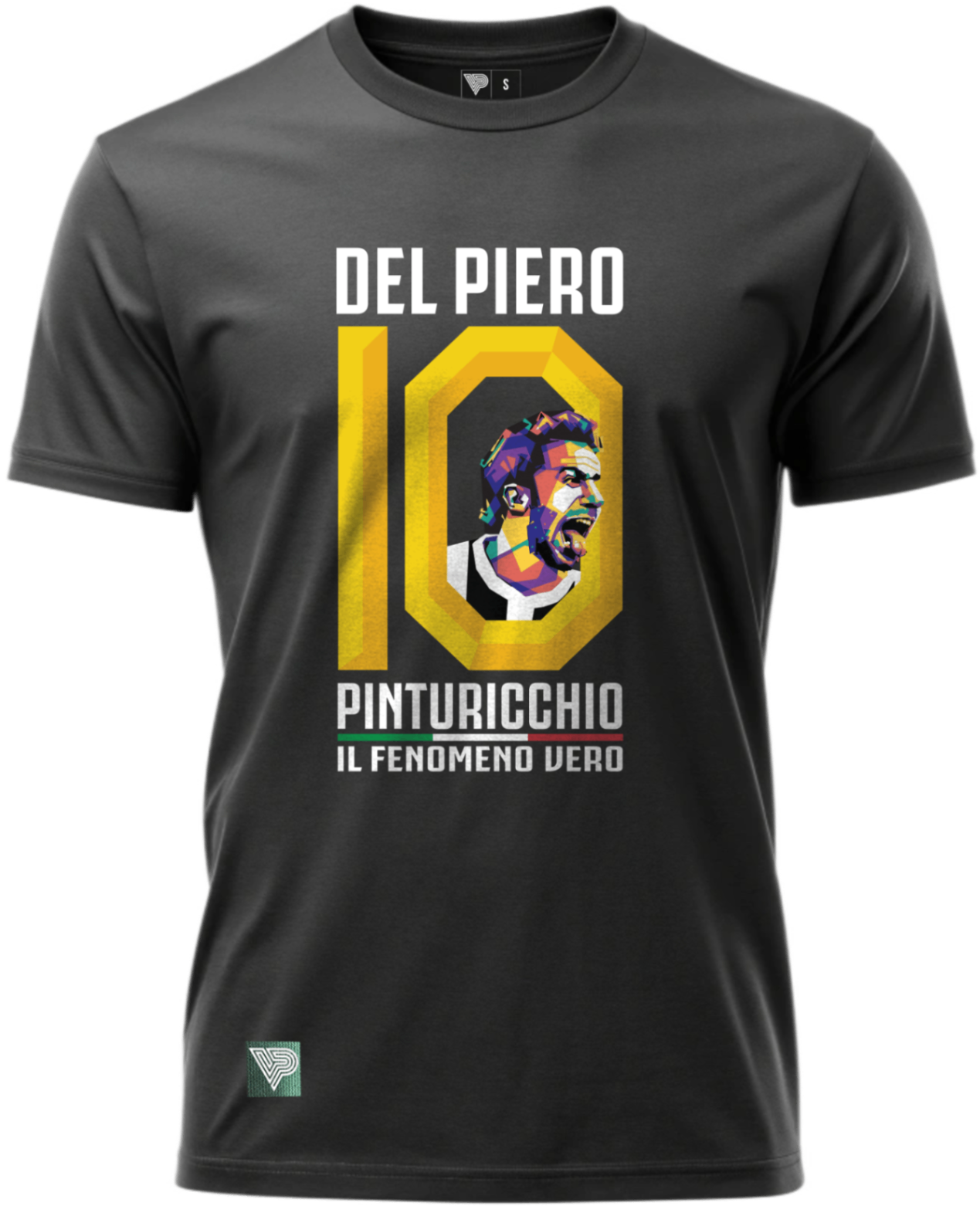
That's the connection to 2026 streetwear culture that everyone's missing. Today's "style" is algorithmic: what's viral, what's dropping, what influencer wore what. Del Piero's era was analog. His style emerged from who he was, not what would get likes. And ironically, that authenticity is what makes it timeless.
Why Pinturicchio Del Piero Still Wins on the Streets
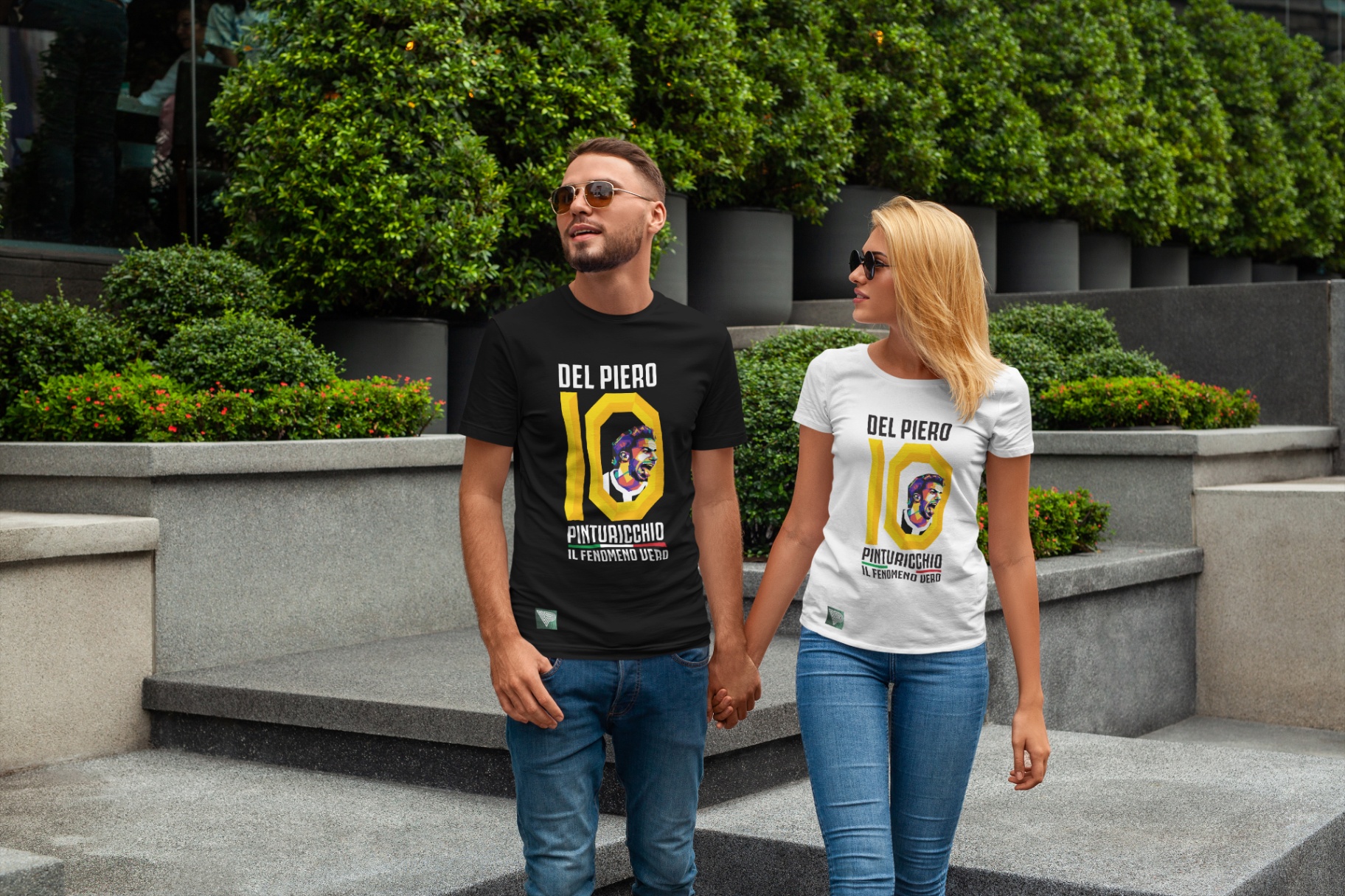
Fast forward to now. Walk through Milan, Turin, London, Brooklyn: anywhere with actual taste: and you'll spot it: heritage football tees paired with vintage denim, Sambas, or beat-up Gazelles. Not the synthetic replica kits that feel like sleeping in a tent. Not the soulless modern designs that all look like they came from the same AI generator.
The real ones know: a vintage Juventus-inspired tee celebrating Pinturicchio isn't just apparel. It's a cultural timestamp. It's saying you understand that style isn't about keeping up: it's about knowing where the bar was set and refusing to accept anything less.

Del Piero's aesthetic choices translate perfectly to modern street style because they were never about fashion in the traditional sense. The wristbands? That's accessorizing with purpose. The sock-laces? That's attention to detail. The reversed boot tongue? That's function meeting form. These weren't Instagram stories: they were daily rituals that became part of a larger identity.
When you wear a heritage Juventus tee celebrating the Pinturicchio era, you're not cosplaying. You're connecting to a lineage of fans who understood that supporting La Vecchia Signora meant carrying yourself a certain way: on the terraces, in the streets, everywhere.
The Fantasista Mentality in a TikTok World
Here's where it gets edgy: modern football has systematically eliminated the fantasista. Everything's analytics, pressing systems, tactical rigidity. The creative number 10 who could change a game with pure magic? Extinct. Replaced by "attacking midfielders" who run 12km per match but couldn't thread a needle if their Nike contract depended on it.
Del Piero represented the last generation of players who could win with style and substance. He wasn't just effective: he was beautiful to watch. And that's become a radical position in 2026 sports culture.

Wearing Del Piero's number 10 today isn't nostalgia: it's protest. It's saying you refuse to accept that football (and by extension, style) should be optimized into sterile efficiency. It's a middle finger to the idea that everything needs to be measurable, quantifiable, and safe.
The Pinturicchio aesthetic was never safe. Long hair when everyone wanted clean cuts. Wristbands when accessories were uncool. Playing with flair when pragmatism ruled. That's the attitude that translates to street style in any era: the confidence to stand out not because you're trying to, but because being yourself demands it.
From Stadio delle Alpi to Your Wardrobe
The genius of Del Piero's enduring style impact is that it works across contexts. You can throw on a vintage-inspired Juve tee with tailored trousers for drinks, or pair it with distressed denim for a match at the local pub. The garment doesn't change: the versatility comes from the cultural weight it carries.
This is what modern football merch misses entirely. A polyester kit with fourteen different fonts and a gambling sponsor isn't versatile. It's a costume. But a well-designed heritage tee that captures the essence of Pinturicchio's era? That's a wardrobe staple that works today, tomorrow, and ten years from now.
Because here's the truth: Alessandro Del Piero's style defined a generation not through trends, but through principles. Attention to detail. Authenticity over approval. Function with flair. These aren't dated concepts: they're timeless ones that just happen to look incredible on a vintage tee.
The recent ADP Collection from Juventus and adidas tried to capture this by blending Renaissance art with modern football aesthetics. They got half of it right. The Renaissance part works because Del Piero was art: Pinturicchio painting masterpieces every week. But the modern football part? That's where they lose the plot. You can't synthesize authenticity.
Il Fenomeno Vero: The Real Phenomenon
While Ronaldo (the Brazilian one) claimed "Il Fenomeno," those who know understand that Del Piero earned a different title: Il Fenomeno Vero: the real phenomenon. Not the manufactured marketing campaign. Not the highlight reel designed for short attention spans. The genuine article who stayed loyal to La Vecchia Signora through scandal, relegation, and resurrection.
That loyalty is woven into every piece celebrating his legacy. When you wear a Del Piero-inspired design, you're not just repping a player: you're carrying forward a value system that's increasingly rare in modern football. Loyalty. Elegance. Style with substance. The belief that how you do something matters as much as what you accomplish.
In 2026, when everything feels temporary and transactional, that permanence hits different. The Pinturicchio aesthetic isn't about chasing what's next: it's about honoring what was great and refusing to let it fade.
So the next time someone asks why you're wearing a vintage Juventus tee instead of whatever dropped this week, don't explain. They either get it or they don't. Those who know that Pinturicchio vs. the World wasn't even a fair fight: because the world was playing checkers while Alessandro Del Piero was painting the Sistine Chapel ceiling with a football.
That's the ultimate street look. Not because it's loud. Because it's undeniable.
🖤🤍 Fino alla fine.